Equip yourself for success in the field of Communication Sciences and Disorders by acquiring practical knowledge and real-world skills applicable in various professional settings. Pursue a major in Communication Sciences and Disorders at FHU to prepare for a rewarding career in speech-language pathology, audiology, or related disciplines.
Department:
Biological, Chemical, and Health Sciences
Department chair name:
Jim Barr
B.S., M.S., Ph.D.
Program Coordinator:
Bambi Troxell
MS, CCC-SLP
The Communication Sciences and Disorders (CSD) degree program at FHU offers comprehensive training in speech, language, hearing, and related areas. It covers diverse populations, including newborns, children, teens, adults, and geriatrics, along with congenital and acquired disorders. Students gain a strong foundation in evidence-based practice, cultural competency, and ethical healthcare. The program prepares graduates for careers in speech-language pathology or audiology.


Communication Sciences and Disorders Degree Four-Year Plans
Embarking on a rewarding career in Communication Sciences and Disorders may seem daunting, but with the CSD program at FHU, you’ll receive the education and clinical skills needed to excel in this competitive field. Our carefully crafted four-year plans will guide you towards a successful graduation, making your academic journey more manageable and fulfilling.
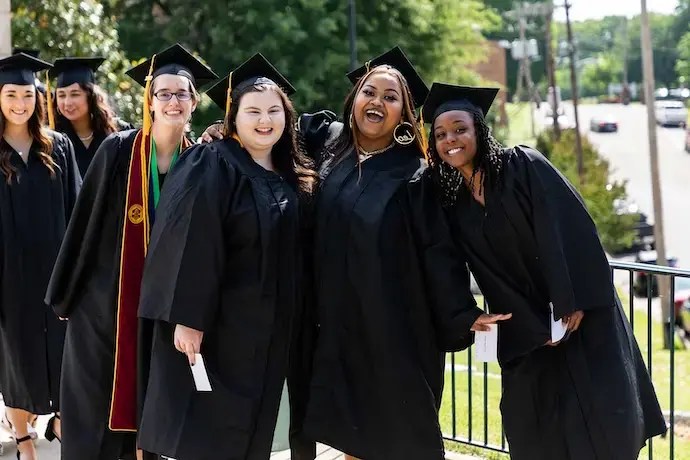
A degree in Communication Sciences and Disorders (CSD) opens up diverse and rewarding career opportunities for students interested in helping individuals with communication challenges. The program provides comprehensive training and knowledge that prepares graduates to work with various populations and address a wide range of communication disorders.
A Bachelor’s Degree in Communication Sciences and Disorders is a challenging and rewarding path for students interested in the field of communication sciences. To earn this degree, students must complete the following prerequisite courses and requirements.
Listed in this catalog under Academics: Liberal Arts Core
Limit II. C. Basic skills to MAT235 Introductory Statistics
Limit III. B. Natural Sciences to CHE 121 General Chemistry I with CHE 121L General Chemistry I Lab
| CSD | 101 | Intro. to Communication Sciences & Disorders & Interdisciplinary Relationships in Education & Allied Health | 3 |
| CSD | 105 | Normal Speech & Lang. Development & Communication Behavior (W) | 3 |
| CSD | 125 | Guided Observations | 3 |
| CSD | 221 | Phonological and Articulation Disorders | 3 |
| CSD | 222 | Language Disorders Across the Lifespan | 3 |
| CSD | 231 | Phonetics | 3 |
| CSD | 290 | Clinical Methods | 3 |
| CSD | 300 | Audiology | 3 |
| CSD | 321 | Anatomy and Physiology of Speech and Language | 3 |
| A. Communication Sciences and Disorders – Non-Clinical | (20 hours) | ||
| CSD | 322 | Speech and Voice Science | 3 |
| CSD | 341 | Cultural Competency in the Communication Sciences | 3 |
| CSD | 380 | Neuroscience | 3 |
| CSD | 400 | Aural Rehabilitation | 3 |
| CSD | 420 | Ethics, Procedure, and Law in Communication Sciences | 3 |
| CSD | 430 | ASHA SLPA Exam Prep Course | 2 |
| CSD | 450 | Senior Capstone: Evidence-Based Practice in the Communication Sciences (W) | 3 |
| B. Communication Sciences and Disorders – Clinical | (24 hours) | ||
| CSD | 322 | Speech and Voice Science | 3 |
| CSD | 341 | Cultural Competency in the Communication Sciences | 3 |
| CSD | 380 | Neuroscience | 3 |
| CSD | 400 | Aural Rehabilitation | 3 |
| CSD | 420 | Ethics, Procedure, and Law in Communication Sciences | 3 |
| CSD | 430 | ASHA SLPA Exam Prep Course | 2 |
| CSD | 450 | Senior Capstone: Evidence-Based Practice in the Communication Sciences (W) | 3 |
| CSD | 325 | Clinic I | 1 |
| CSD | 326 | Clinic II | 1 |
| CSD | 426 | Clinic III | 2 |
Below are answers to questions prospective students often have when considering a major in Communication Sciences and Disorders. If you have additional questions or need more information, please contact admissions@fhu.bramblettgrp.com and we will happily answer questions and provide additional details about our program.
The Communication Sciences and Disorders (CSD) program at FHU offers numerous benefits for students interested in pursuing a career in this field:
In summary, the Communication Sciences and Disorders program at FHU offers a comprehensive and well-rounded education, equipping students with the skills and knowledge to pursue rewarding careers in this vital and impactful field.
The job outlook for graduates with a degree in Communication Sciences and Disorders (CSD) is generally positive and promising. As the demand for speech-language pathologists, audiologists, and other communication disorders specialists continues to grow, there are numerous opportunities for CSD graduates to embark on rewarding careers in various settings. Here are some key factors contributing to the positive job outlook:
Overall, the job outlook for graduates with a degree in Communication Sciences and Disorders remains positive due to the increasing demand for their expertise in various sectors. As communication disorders continue to be recognized as critical health issues affecting people of all ages, CSD professionals are well-positioned to make a significant impact on individuals’ lives and their communities.
While earning a degree in Communication Sciences and Disorders (CSD) at FHU, you will acquire a range of essential skills that are vital for a successful career in the field. Some of the key skills you will learn include:
These skills will prepare you to work with diverse populations and in various settings, including schools, healthcare facilities, private practices, research institutions, and more. As a graduate with a degree in Communication Sciences and Disorders from FHU, you will be well-prepared to make a meaningful impact on the lives of individuals with communication challenges and contribute to the advancement of the field.
With a Bachelor of Science in Communication Sciences and Disorders (CSD), you have several career options in various settings that involve working with individuals with communication challenges. While a bachelor’s degree in CSD does not qualify you to become a licensed speech-language pathologist or audiologist, it does open doors to a range of fulfilling roles. Here are some potential career paths you can pursue with a bachelor’s degree in Communication Sciences and Disorders:
It’s essential to note that some of these positions may require additional certifications or training beyond the bachelor’s degree. While a bachelor’s in CSD provides valuable knowledge and skills, pursuing a master’s degree in speech-language pathology or audiology is typically required to become a licensed professional in those fields.
Many graduates with a bachelor’s degree in CSD choose to continue their education by enrolling in graduate programs to become licensed speech-language pathologists or audiologists, leading to more specialized and advanced career opportunities in these areas.
Still Deciding on a Major?
Are you Ready to
Be a Lion?